
Training Law Students for Legislative Drafting
By Lou Rulli
I am a volunteer organizer of the International Conference on Legislation and Law Reform which brings together government officials, professors, and practitioners to examine how laws are written in the United States and globally. Our goal is to advance knowledge and critical thinking about legislation while furthering democracy and the rule of law.
My day job is as a practice professor of law at the University of Pennsylvania Carey Law School where I have taught clinical courses in legislation and litigation for the past thirty years. I direct a Legislative Clinic that teaches law students about legislative process, drafting, and advocacy, while engaging them in actual legislative work in Congress, the Pennsylvania legislature, and Philadelphia City Council.
I have been asked to share a few thoughts on teaching law students the skill of legislative drafting. The case method has dominated legal education for over a century, with students reading appellate decisions to learn analytical skills and legal reasoning and to “to think like a lawyer.” In clinical courses, I remind upper-class students that good lawyers should understand all three branches of government – not just the judiciary. They often admit that they know little about the making of sausage and are eager to understand how policy choices become law. My goal is to provide students with a deeper understanding of legislative process and the importance of careful legislative drafting to maximize the likelihood that policy goals are achieved and unintended consequences are avoided. This is best achieved by exposing students to clinical instruction in the classroom along with actual experience in the many places where legislation takes shape.
In the classroom part of the Clinic, I assign helpful readings and use varied techniques that include class discussion, simulated exercises, video, student presentations, and guest lectures. I put the legislative drafting pen in the hands of the students, followed by critique and comparison of student work. I am modest in my expectations. Students cannot be expected to become proficient drafters in one clinical course. However, all benefit from understanding basics, and those pursuing drafting careers will seek in-depth instruction and mentoring at professional drafting offices like the U.S. House Office of Legislative Counsel or state legislative reference bureaus after graduation.
Because this blog is intended to be short, I will simply share two exercises I assign in the first few classes of the Legislative Clinic. These examples are followed with more complex exercises as the semester unfolds. I hope these examples are helpful in thinking about progressive instruction over the course of the semester that will light a passion for future development after graduation.
Exercise One: Drafting a Traffic Statute
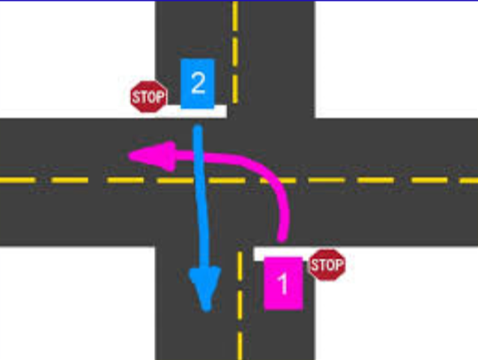
In the very first class, after reviewing introductory materials and required readings, I ask each student to draft a traffic statute governing left turns at an intersection when oncoming traffic is present. I chose this exercise because all students are familiar with driving rules. Students have fifteen minutes to draft their statutes. Before the next class, I prepare a critique of their statutes on PowerPoint slides that allow students to see what each has done. The assignment highlights common errors: verbose language, legalese, unnecessary modifiers, disorganization, and ambiguity leading to unintended consequences. The exercise shows students that legislative drafting differs from brief writing and is harder than expected.
The exercise is an addition to our review of a California Vehicle Code case requiring a driver turning left at an intersection to “yield the right-of-way to all vehicles approaching from the opposite direction…” The case focuses on the meaning of the word approaching when applied to a driver who was ticketed for turning left so fast in front of an oncoming driver stopped at a traffic light that the driver had not yet moved when the light changed. The defendant argued that since the other driver had not yet moved, the driver was not approaching. I assign students different roles in this discussion -- prosecutor, defense attorney, judge, and legislator -- to analyze the statute’s intent and application to this factual situation. At center stage is the difficulty of drafting precise language applicable to different situations while avoiding ambiguity.
Does the word “approaching” apply to direction or to movement? Students wrestle with this question and others while reviewing the history of the statute and court decisions applying this language to the facts. The exercise introduces several basic drafting concepts: using singular form, present tense, and active voice; maintaining consistent terminology; avoiding unneeded modifiers; and applying negatives to actions, rather than to actors. Ultimately, students consider how much textual clarity courts should expect from democratically elected legislators?[1]
Exercise Two: The Civil Liberties Act of 1988
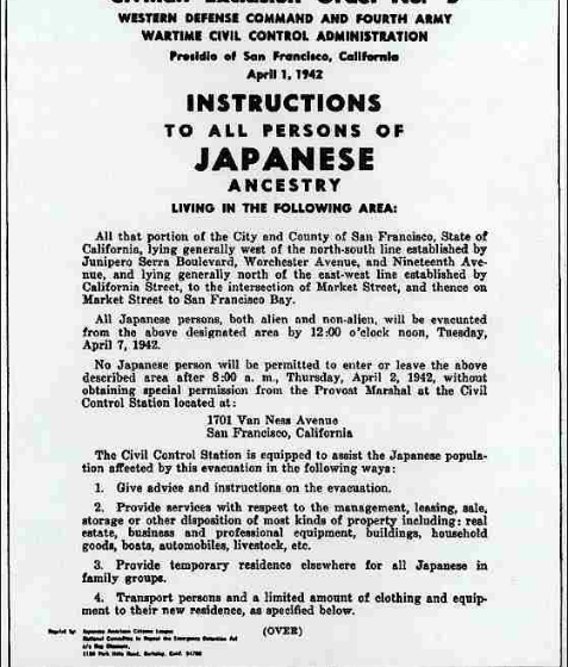
Several weeks later, we revisit the history of Executive Order 9066 issued on February 19, 1942, ten weeks after the bombing of Pearl Harbor. I show a video of Japanese-Americans describing their forced relocation to internment camps, leaving behind their homes, jobs, and belongings. We discuss criminal legislation for violations of orders and proclamations enforcing the Executive Order, and unsuccessful court challenges including the landmark decision in Korematsu v. United States.
I then tell the students that it is 1980, almost forty years later, and they work for a Senator seeking remedies for approximately 125,000 internees. Time is critical as many internees are elderly or deceased. We examine whether litigation can accomplish the Senator’s goals but conclude that litigation faces formidable obstacles such as governmental immunity and the statute of limitations, making legislation necessary.
Before the next class, students submit memos identifying three issues that remedial legislation should address, explaining their policy choices without yet drafting specific language. Their memos set the table for what should be included when drafting to accomplish the Senator’s goals.
This assignment introduces a wealth of important questions: Should compensation be awarded or should the bill be limited to an apology or educational or historical initiatives? Should compensation be a flat sum or tailored to actual loss? Who is eligible for compensation -- including heirs -- and is that determined by state law or one uniform definition in the statute? How will notice be provided and to whom will that burden fall? What will be the claims process? Will benefits be taxable or affect other public benefits? How are appropriations authorized, and is there legal entitlement to compensation or a limited fund with priorities for distribution? What administrative agency will determine the validity of claims, what is the burden of proof governing claims, and what is the process for judicial review? What waivers are required if compensation is accepted? The list of issues to consider goes on and on.
Of course, these issues and others were addressed by Congress when it passed the Civil Liberties Act of 1988. I prohibit students from looking at that statute when doing this exercise. After discussing student-identified issues, I share relevant sections of the Civil Liberties Act on PowerPoint slides so students can see Congress’s political compromises and the legislative drafting needed to accomplish those choices. A closing video features the then Speaker of the House of Representative explaining compromises that were necessary for consensus.
In future weeks, students will hear presentations from professional drafters (including a drafter who worked on the Civil Liberties Act), legislative staff, and on occasion elected officials, while tackling more complex drafting assignments. The semester is short, but the journey has begun.
Conclusion
As most teachers will affirm, our students inspire us. My former students have been elected to the U.S. House of Representatives, the Pennsylvania Senate, and the Secretary of State of a major state. Still others serve admirably on Congressional committee staff and in government at all levels. Law school can ignite a spark, and, hopefully, students will use their skills and passion to strengthen democracy around the world.
[1] This part of the exercise is based largely upon the Marsh traffic exercise discussed in the popular casebook by Eskridge and Frickey, Cases and Materials on Legislation.